
Music- whether that be from score or soundtrack- is used in many ways in various Neo-Western films, such as Hell or High Water, Wind River, and No Country for Old Men. Let’s take a look at the music in these three films and what it all means.
Hell or High Water (2016) Review: Beauty in Simplicity
Introduction
I mentioned previously that Hell or High Water (2016) is one of my personal favorite films, and there are many reasons for that; the writing, directing, editing, acting, and cinematography are all top notch, and perfectly exemplify what a Neo-Western should be. All of the aforementioned elements coalesce to form a film that finds its beauty in the simplicity of its story.
In order to provide a full understanding of just why Hell or High Water is so good, allow me to delve into each of the film’s key components in more detail.
Writing

I’ve briefly discussed the influence that screenwriter Taylor Sheridan has had on the Neo-Western genre previously; with Hell or High Water (2016), Sicario (2015), and Wind River (2017), Sheridan has supplied the film-making word with not only some of the best Neo-Westerns out there, but some of the best films in the last decade.
While writing the script for Hell or High Water, Sheridan’s philosophy was “simple plot, complex characters.” The plot is as simple as this: two brothers rob banks in West Texas with two Texas Rangers on their tails. As mentioned previously, the complexity in the film comes from the characters. Toby is the cautious one of the two brothers and is apprehensive about robbing banks, but does it out of a desire to prevent the bank from seizing their late mother’s land and a desire to lift his children from poverty. His brother agrees to rob banks not just because it’s an excuse to satisfy his violent urges, but also because he loves Toby and would do anything for him.
There’s lots more complexity to the film’s relatively small cast of characters, but for the sake of maintaining some brevity, let’s move on.
Directing

Hell or High Water’s direction is definitely a highlight of the film; director David Mackenzie brings a lot to the film that wasn’t in the screenplay, such as the perfect use of soundtrack and score music. It helps, of course, that the film has an absolutely exceptional score by the great Nick Cave and Warren Ellis.
Additionally, Hell or High Water is wonderfully paced; it’s fairly short for a feature-length film, and boasts a gripping opening sequence that pulls viewers in, a swathe of character-building and plot development in the middle, and an explosive finale, the impact of which benefits from the relative lack of violence in the second act.
This is, of course, mostly a testament to the structure of the screenplay, but it’s still important to acknowledge the Mackenzie’s role in bringing it all together.
Editing

The aforementioned well-paced nature of Hell or High Water is also due to the film’s great editing; in this case, great structural editing. However, something that’s often overlooked when discussing the editing of films is the momentary editing, which Hell or High Water excels at.
The momentary editing suits the needs of scenes perfectly; during an intense bank robbery sequence where multiple points of danger are being juggled at once, the editing is fast (but not too fast like Bohemian Rhapsody). During a slower scene of two people somberly discussing the passing of their mother (as depicted in the image above), the editing is very slow and thoughtful.
There’s really not too much more to say about the editing because editor Jake Roberts (who also edited Brooklyn and The Hitman’s Bodyguard) did an absolutely perfect job.
Acting
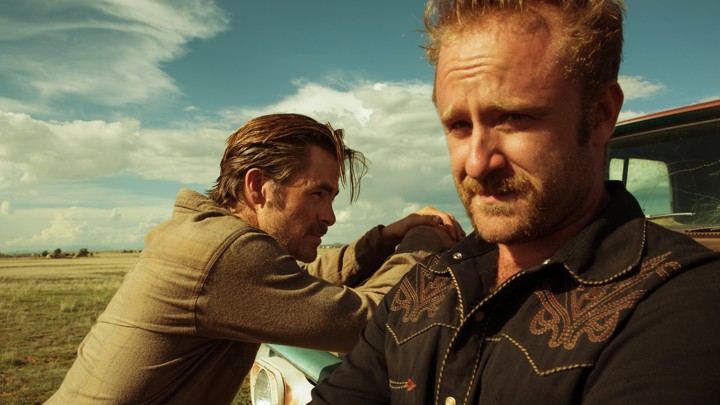
Every single actor gives a wonderful performance in Hell or High Water, from lead actor Chris Pine (who usually doesn’t do these kinds of movies) to Margaret Bowman, whose one-scene performance as a cranky waitress is incredibly memorable.
The most important thing to note about the acting in this film is that nobody over-acts; the director and actors smartly opted for performances that more quiet, subdued, and better reflections of real life. This contributes heavily to the realistic feel of the movie, and also makes the setting of the dying West feel more authentic.
One of the biggest compliments I can give to the acting- especially to leads Chris Pine and Ben Foster- is that they make violent bank robbers incredibly sympathetic.
Cinematography

The cinematography of Hell or High Water is simply immaculate. Shots are handheld when necessary and locked-down when necessary. There’s zero shaky cam in the action scenes; the raw, brutal reality is presented without a hitch.
Additionally, the cinematography really solidifies this film’s place as a true Neo-Western; gorgeous landscape shots- both from the ground and in the air- help to highlight the beauty and emptiness of West Texas.
Also, there’s little-to-no fancy driving shots; besides the occasional beautiful flyover, we’re mostly kept within vehicles as they drive, which adds to the intensity of some scenarios. For example, as our lead characters are driving into the busy town of Post for their final robbery, our perspective never shifts from what they’re seeing.
There’s some absolutely beautiful cinematography on display here that is often overlooked when discussing this film.
So, there it is! There’s a whole lot more I can say, but all-in-all, Hell or High Water is an exceptional film down to just about every single aspect. It’s a refreshing film in that it’s so wonderfully simple, but very well-crafted; it serves not only as a brutal, sad portrait of the dying American west, but also as a character study of two brothers whose desire to do anything for the other leads them down a dangerous path.
For more on Hell or High Water and others like it, be sure to stay tuned!
Definition Woes
Lots of people have trouble defining the Neo-Western (if only they were blessed by my previous post, huh?). If my aforementioned and described definition wasn’t clear enough, we can make it a whole lot more clear by taking a look at an instance where the term wasn’t used correctly whatsoever.
Collider
While it does offer some interesting insight and also sheds light on some wonderful films, Collider’s “8 Must-See Neo Westerns: The Old West is New Again” does what many people tend to do when the rare discussion of Neo Westerns arises: they conflate a “western” with a “neo western.” It’s an honest mistake, but it’s one that propels the discussion in a completely different direction.

Instead of focusing only on films such as 2016’s Hell or High Water (a film that the article actually references), Collider also discusses films such as 2013’s Django Unchained and 2016’s The Hateful Eight. These are both great films and absolutely worthy of discussion, but where Collider goes wrong is that they mistake the definition of “neo western” to mean “westerns that were made in modern times” instead of the actual definition, which is: “westerns that take place in modern times.”
A Neo Western just as easily could have been made in the year 1960 as it could have in the year 2019.
The Artiface
An article by The Artiface beautifully sheds more light on the above concept when they include a quote from Hell or High Water that says (language):
“Ought to let it just turn me to ashes, put me out of my misery. 21st century, I’m racing a fire to the river with a herd of cattle. And I wonder why my kids won’t do this shit for a living.”
As The Artiface points out in their article, this quote perfectly encapsulates the identity of the Neo Western, which is actually about a loss of identity and the death of a lifestyle (among other things).
The Artiface continues to get the definition correct when they go on to list three great Neo Westerns: Hell or High Water (2016), No Country for Old Men (2007), and Sicario (2015). You might’ve noticed that I’ve referenced 2016’s Hell or High Water on this site multiple times already; I’ve done this not just because it’s one of my personal favorite films, but also because it’s a perfect representation of what a Neo Western is, as are writer Taylor Sheridan’s other films (Wind River and Sicario).
To shed some more light on how significant Sheridan’s work has been for the Neo Western genre, check out this video by Jack’s Movie Reviews:
Defining the Neo-Western
A Neo-Western film carries over the themes and traditions of the typical Western genre, but one with one variation: a Neo-Western takes place in the contemporary world.
Some examples of Neo-Westerns include No Country for Old Men (2007), Hell or High Water (2016), and even Logan (2017). While the settings of these films do vary (one takes place in the 1980s, another 2016, and another 2029), they all implement similar themes of isolation, the “open road,” and traditional Western imagery, like this:
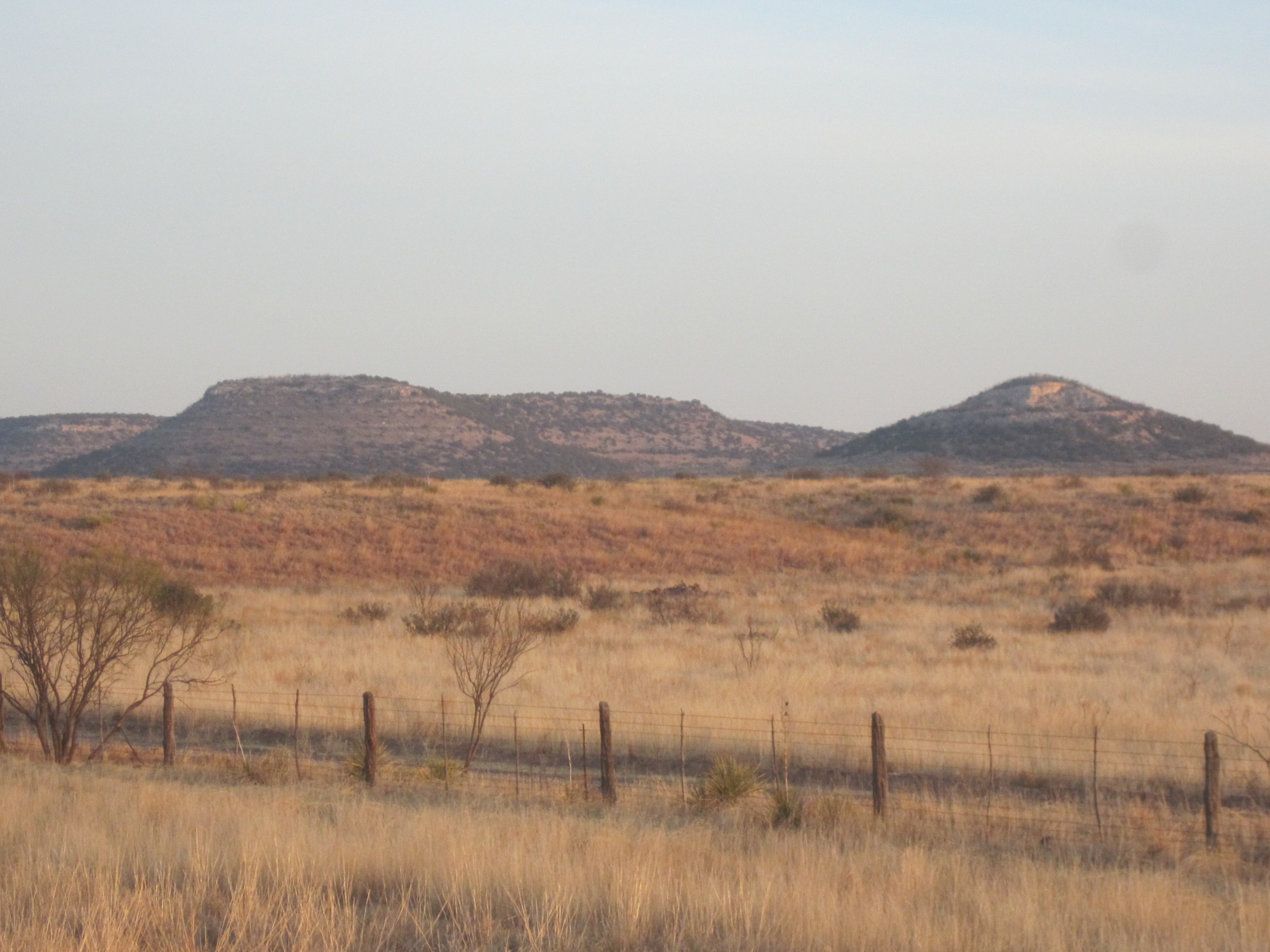
The above image is from West Texas; as it just so happens, all three films listed above primarily take place in West Texas. However, that doesn’t mean that a Neo-Western must take place there, or even in the desert; as long as it maintains the tone of a Western, a film can still be a Neo-Western (take Wind River, for example).
In order to see a Neo-Western in action, I’ve embedded a scene from each aforementioned example below:
 The Neo-Western